
Everybody asks how it is in Hong Kong, about the protest of Occupy Hong Kong.
My mom warned me not to go to places with many people (a difficult task in a tiny city state with 7 million people…)
Fact is: I haven’t seen or felt anything of the protests. Strictly nada. Ok, I heard that traffic was worse than normal as some roads were still blocked, but I have no way to judge that…
So it was time to go and see for myself what was going on.
With a bit of care, after all my sister and I only just about avoided getting into the tear gas on Istiklal Street in Istanbul in spring.
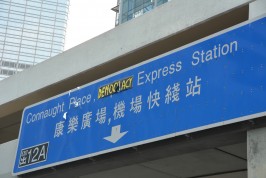
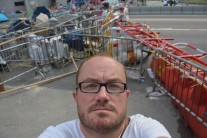
I went to the downtown district around the Admiralty Metro stop, where I had seen some tents on streets, from afar.
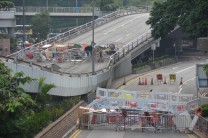
The students have blocked one of the main roads in Hong Kong, and it does create a fair amount of traffic jams.
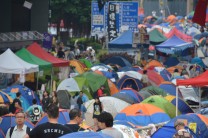
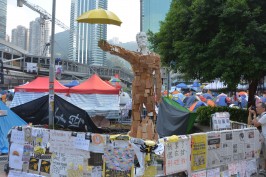
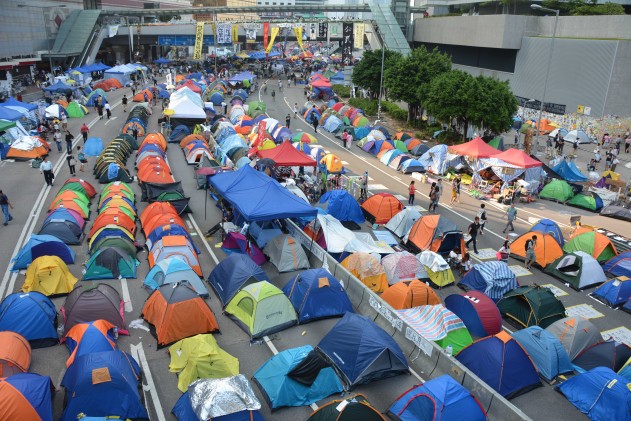
Truth is, the atmosphere is peaceful and serene. Students are camping out on the city highway and on a major intersection.
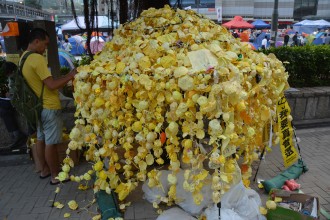
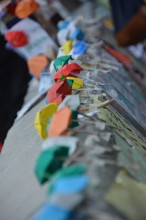
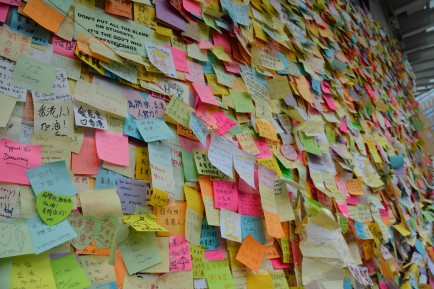
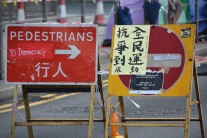
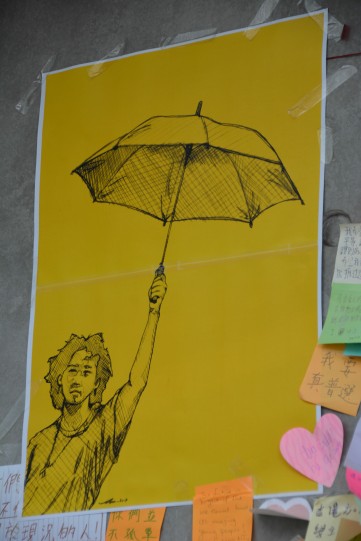
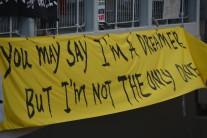
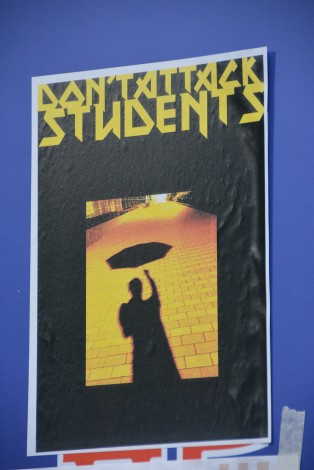
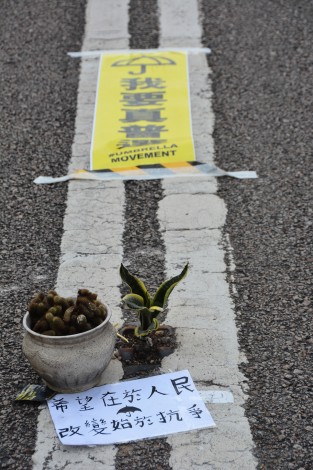
They have their tents to sleep and a number of info stands, they have decorated about every surface in the vicinity with their messages and demands. A great wall has been put up with thousands and thousands of post its.
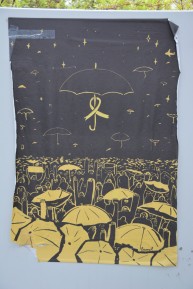
Umbrellas are omni-present, and gave the movement its same: the Umbrella movement. Basically they used them as a defense against tear gas.
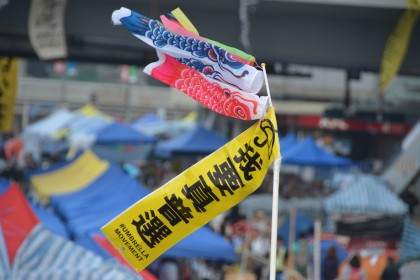
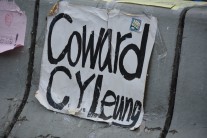
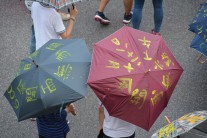
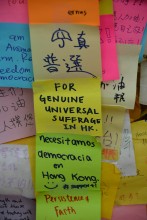

Their main demand is, in a nutshell, to make the upcoming 2017 elections truly democratic.
Right now the Hong Kong basic law, which gives the city is special stays within China until 2047, guarantees a number of civil liberties unknown in mainland China. Among them somewhat free elections.
The problem is that the candidates for election will be, in principle, proposed by China, or pre-selected through some electoral committee. So the people will have a choose between pre-approved candidates, but cannot put up candidates themselves.
As I understand, this is that the basic law provides for, but the students want a free choice. Which of course China does not want to grant.
Harsh police tactics, which included the use of tear gas and rough attacks on protesters by probably paid opponents have triggered more citizens to join the protests. The occupation spread to the areas of Causeway Bay and Mong Kok.
It seems the situation is at a deadlock. The demands of the students seem unlikely to be met. And they seem unlikely to relent and let go.
Right now, there’s an eerie silence. The protests block one of the major traffic arteries in the city, and from what I can read in English mock the Hong Kong and Chinese authorities.
It’s a challenge that, right now, is answered with silence. There is police around, but only a handful. You can easily access the protest areas, wander around and talk to people.
Flyers and messages are left where they are. It seems the authorities simply don’t know how to handle this, as their first strong reaction has only instigated more resistance and drawn international media attention.
I talked to a young Chinese guy who provided me with a bit of insight.
I feel that most expats that I have met and talked to don’t really have a relation to the protests, and are mostly bothered by the traffic jams, than by the general question of democracy for Hong Kong.
True enough, they have foreign passports and are highly skilled, globally mobile people who will just wrap up everything and move on if they don’t like it in Hong Kong anymore.
The students though are fighting for their cause, and their vision of a democratic Hong Kong.
The authorities probably just hope the movement will run out of steam and dissipate. The true test I guess will come closer to the elections.
And, much later, closer to the date of 2047, when the special status of ‘one country, two systems’ for Hong Kong is supposed to end.
But then, who can say what China and the world will look like in 2047…?
PS: The students asked not to be photographed full frontal and close-up, so I respected that and won’t publish those.