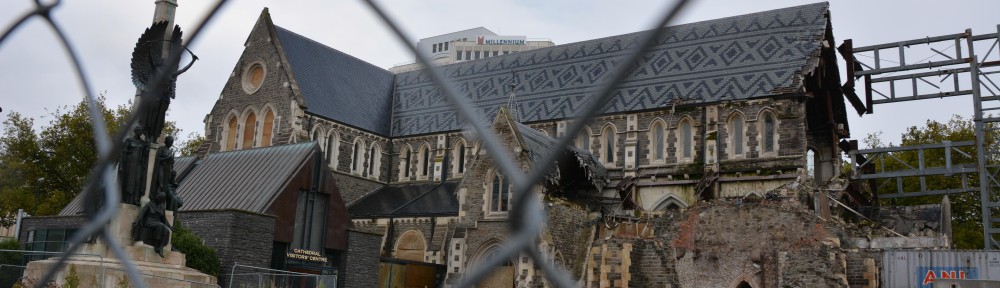
In the late afternoon I drove into the city center of Christchurch. Sure, I heard and read about the 2010 and 2011 earthquakes that killed 185 people… However I was totally unprepared to what was waiting for me.
I had not expected to see a city that devastated. I imagined buildings standing, damaged, cracked, maybe some to be demolished… but I expected a city that is still somewhat functioning, alive, with people.
The reality is that it looks like a German city around 1946, after they cleaned out the rubble. With less people. I don’t think many people are still living there.
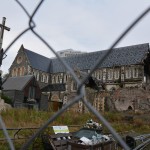
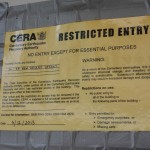
It’s hard to find words for it. So many buildings are still in ruins, fenced off, or in the process of being torn down. Many others bear the access restriction orders, waiting for their fate to be decided.
Empty store fronts, with furniture or merchandise left behind. It reminds you of a ghost town. Many spaces and places are empty, maybe temporary parking lots, or simply gravel fields.
The main square with the old cathedral is especially sad. The tower of the Cathedral collapsed and the remaining ruins are barred behind fences. Several aftershocks damaged the building further.
A temporary cardboard cathedral has been built a few blocks down, however the question is still open for the original. While the Church opted for a demolition, several local groups have sprung up to save the building and reconstruct it.

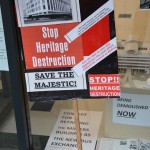
Some city buildings are undamaged, or have recently been restored and reopened to business. However, with so much of the city gone, it lacks any city life. Parking space? No problem here.
And even those few buildings, hotels and businesses that are open must sure struggle to survive – if the city around them is basically gone, where are your customers? It must take decades to reconstruct.
And how would you do that? I imagine they first tried to restore the basics like water, electricity, fill the holes in the streets… but how do you rebuild a city on such a massive scale? Where to start? Who decides which buildings can be salvaged? What price are you willing to pay for it…?
The questions are endless, and so is the potential for conflict… But the city has a plan now, the Christchurch Central Recovery Plan.
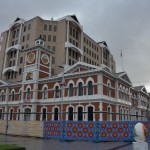
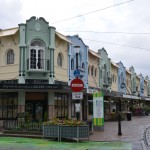
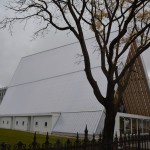
I was speechless. I took a few pictures, but I felt like I was disturbing the city, taking pictures of its misery… so I started to take photos of the newly opened, rebuilt places.
It started to rain, too, so I stopped walking and drove around a bit, zigzagging and driving the navi mad – with so many streets closed permanently or temporarily for works, nothing made sense to the little voice trying to direct me.
I heard that some of the suburbs have also been hit hard. So hard that they had to be given up. The ground liquefied during the quakes and is no longer stable to support any structures.
The government has started to buy up the properties, and they are discussing what to do – turning whole parts into parks, probably.
100.000 buildings were damaged, and 10.000 will have to be demolished. In the city center, a quarter of the 4000 houses are gone. Half of all buildings higher than 5 stories have already been or are in the process of being demolished. The city has literally been flattened.
While technically, the 2011 earthquake, reaching 6.3 on the Richter scale, was only an aftershock of the initial 7.1 quake from September 2010, it was much more destructive to the city, as it was closer to the surface.
Satellite images indicate the displacement of the land south of the fault was 50 cm westwards and upwards. The jolt and the vertical movement was so intense, people were literally thrown up into the air.
Most cities would not survive such an energy release so close by. Christchurch, it seems, due to its building codes, was actually lucky to come out of it as it did.
Und ich war nur ein Jahr vor dem Erdbeben da und alles in bester Ordnung, gemuetliches Staedtchen, leicht britischer Collegetowntouch..danke fuer die Photos. Von Christchurch ging damals meine Tour los.