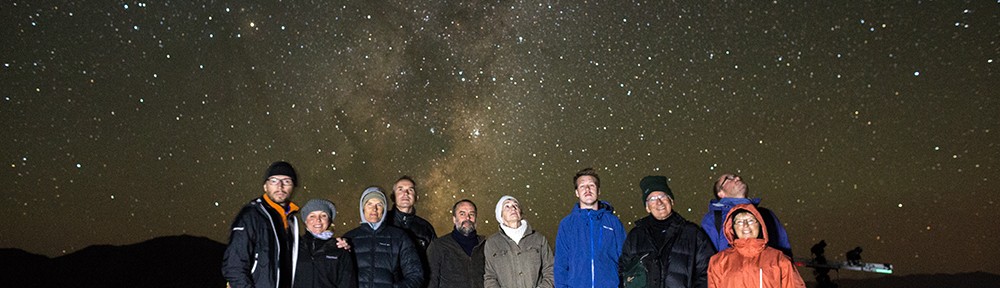
I had read about Earth&Sky star gazing tours in one of the many, many flyers, magazines, leaflets that you collect on these trips… It sounded great, a night time tour on top of a mountain, with astronomers from the observatory in one of the darkest parts of the country….
I was even more thrilled to learn that it was really on my way south, and that I had booked a room close-by. So I called in the morning of what looked like it was going to be a bright, sunny and above all cloudless day, and got one of the last tickets for the 2-hour 10h30 night time tour. It was expensive. But worth every cent.
The University of Canterbury’s astronomical observatory sits on the summit of Mt. John, its domes can be seen from the town during the day. Mt. John was chosen as the best site for an observatory in New Zealand.
It has mostly clear nights, a transparent atmosphere and the uniquely dark skies in the Mackenzie Basin, devoid of city light pollution (Hello, Belgium?). The astronomers claim it’s one of the best-situated observatories for viewing the southern night skies.
For the tour, we had to check in at the office in town a bit earlier. They already warned us to wear as much clothing as possible and also provided jackets. Nights high up on Mt. John can get pretty cold already. So I wore several of my light t-shirts and sweaters and hoodies.

We were also strictly instructed not to use anything that would emit white light: flashlights, torches, iPhones or iPads were strictly taboo. The bus driver even had to drive the last two kilometers to the observatory without his headlights, had to cover his controls in the bus and could only navigate in a dim red light. We were also given tiny red LED lights so we could find our way on the rocky, uneven mountain top.
The reason being that the instruments in the observatory are so incredibly sensitive that already the white screen of an iPhone might disturb whatever measurements they are taking at the moment. There is also a no-fly zone above the region, for that very reason.
But not only we had to be super careful: The whole town of Lake Tekapo is dimmed down at night. Street lights are kept to a minimum. The lamps are some kind of sodium red light, very dim, and emit very little light to the sky.
All advertising is shut off at night, and even the bars that are still open late will have their blinds shut. The town is pretty dark, only interrupted now and then by passing cars with their headlights.
All the effort pays off though: the area has been declared an International Dark Sky Reserve. A title that brings all the above mentioned restrictions to protect the dark skies, abut also a huge number of tourists.
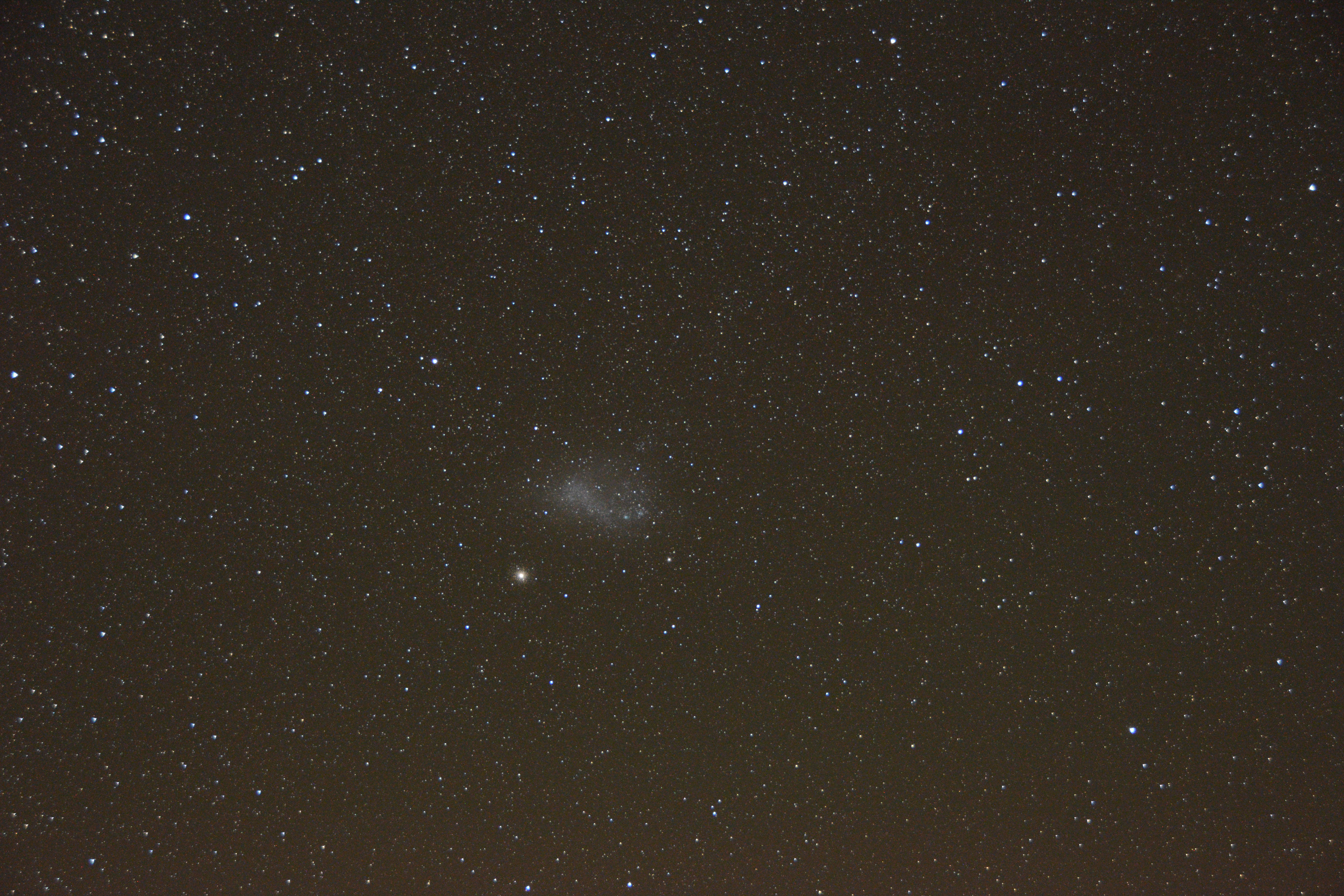
The tour itself was amazing. Our guides indicated a number of phenomena in the Southern skies, from the Southern Cross to the Magellan Clouds, two dwarf galaxies circling our Milky way and named after Portuguese discoverer.
We had a look through several telescopes, seeing Jupiter and its moons, Saturn and its rings, but also far away objects like the M83 galaxy, also known as the Southern Pinwheel, star clusters and quasars.
But the most amazing view was the Milky Way itself. It is much more impressive in the Southern hemisphere, as they can see toward the galaxy’s center (while the North looks outwards).
Secondly, it really was so amazingly dark (we also had no moon in the sky) that you can see not only a faint milky band across the sky, but you can see its internal structures, dark clouds and nebulae, that hide the light from stars behind.
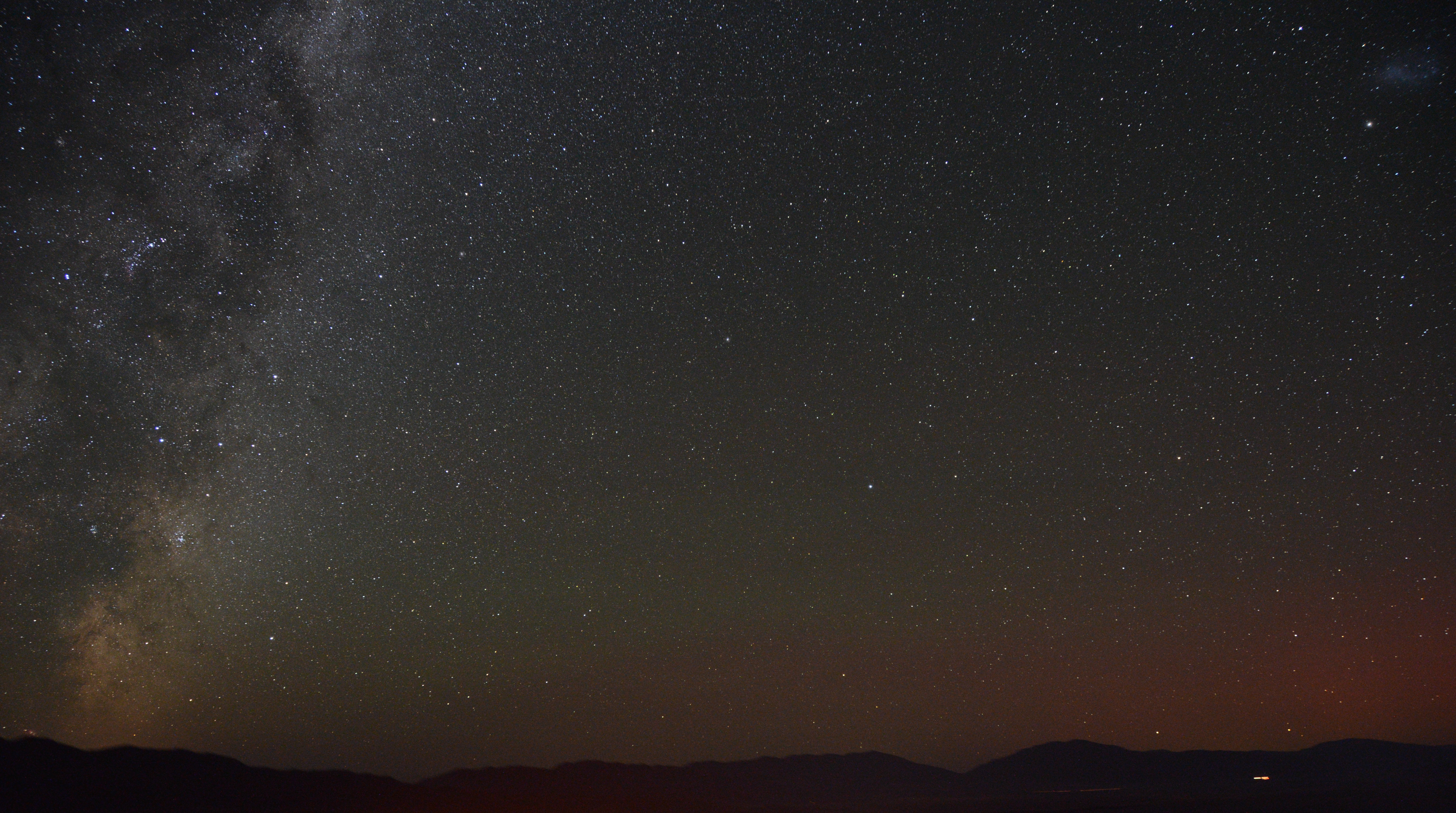
I also got to see some faint Aurora australis, the Southern lights, a faint green and red glow in the south. You can see them in one of the pictures above the horizon.
I could have spent all night out on the mountain with those guys, who were super friendly and answered all our questions.
On top of it all, they had an astrophotographer there, David Weir from Earth&Sky, who took our DSLR cameras to take some shots of the night sky.
I had taken it with me, hoping I could experiment a bit with my tripod and some long exposure time… however, his equipment was so much more professional. He mounted the cameras on a device that automatically corrected for the rotation of the Earth during the long exposure shots, to avoid blurring…
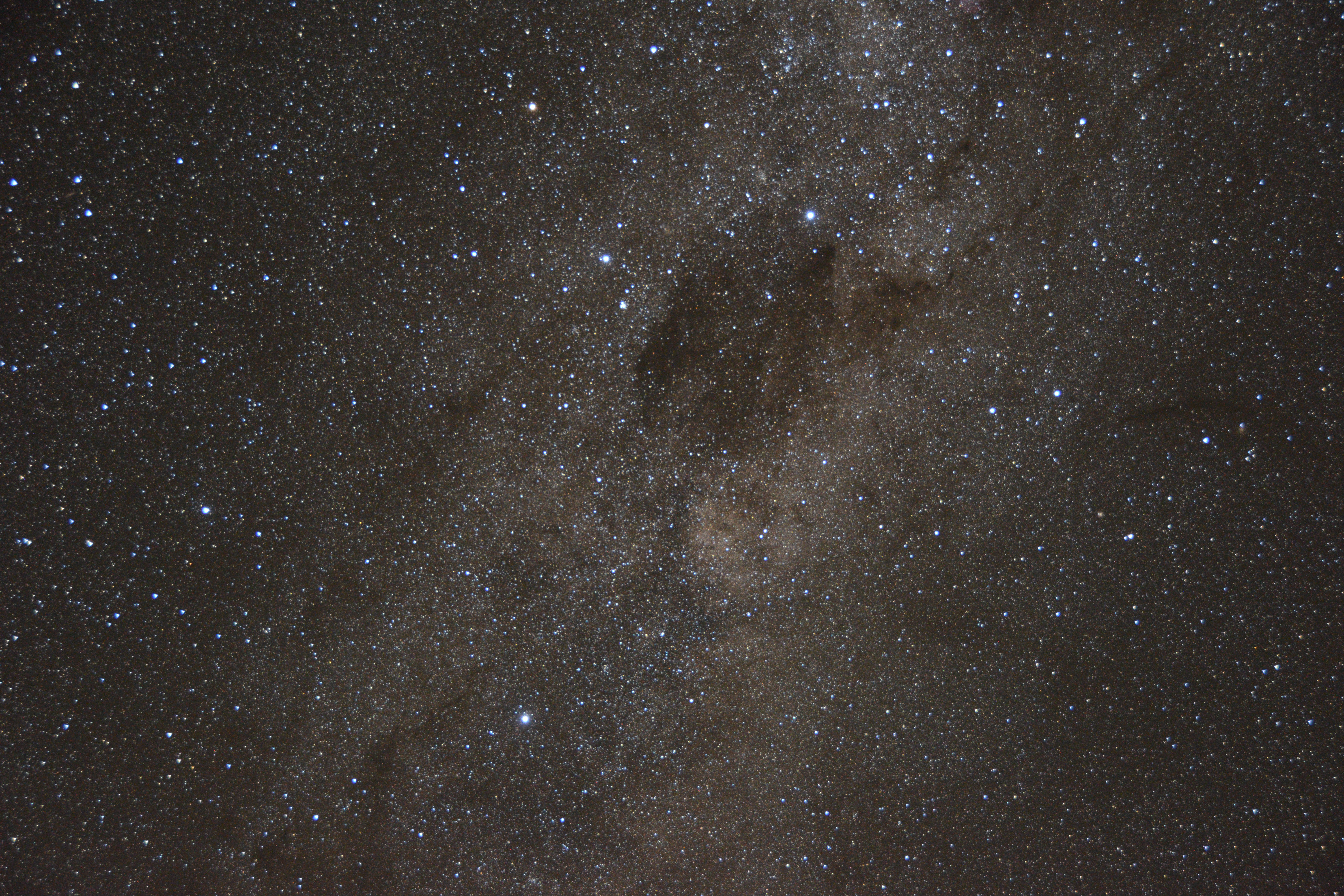
You can see the results. Fascinating. To quote Mr. Spock.
It was definitely a night to remember.
Check out their account on flickr for more amazing pictures.