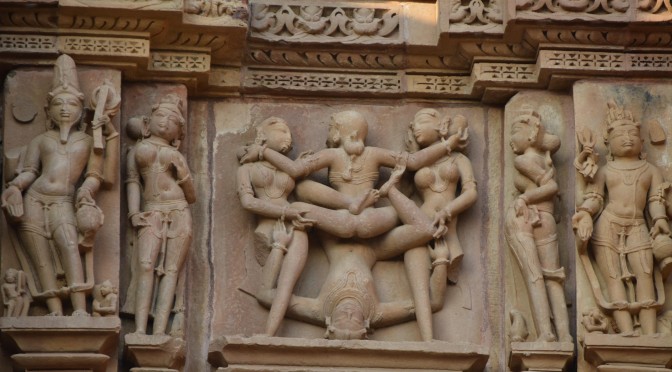
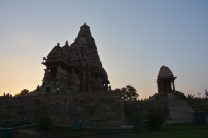
The reason to come to Khajuraho are its Hindu and Jain temples.
Most temples were built some time between 950 and 1050, during the Chandella dynasty. Records suggest that there were once 85 temples, but only about 20 survived the Muslim raids and conquests, and the vegetation growing over them for centuries.
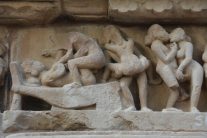
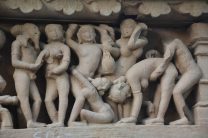
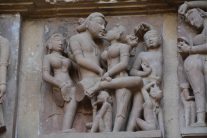
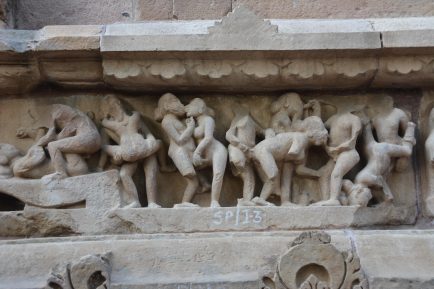
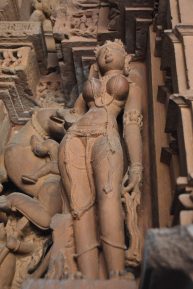
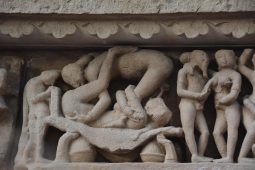
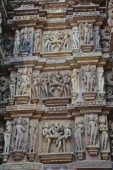
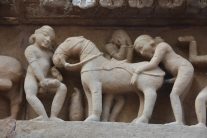
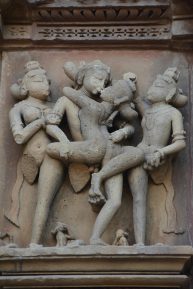
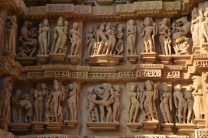
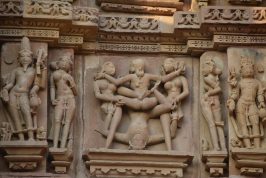
What makes them so special, and fun to watch, are the countless erotic carvings hidden in the many statues on the outside of the temples, depicting a number of complicated Kamasutra positions, or simply, plain sex.
Couples, threesomes, orgies, or simple soldiers getting friendly with their horse are depicted, often with other figurines looking upon the action, hands held in front of their face, but onlooking with one eye.
The carvings are not all about sex though. The vast majority show various aspects of everyday life, war scenes, soldiers, or mythical stories.
Some figurines for example show women putting on makeup, musicians, potters, farmers, and other folks in their daily life.
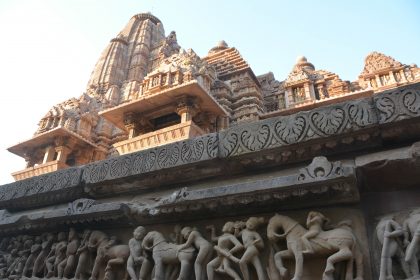
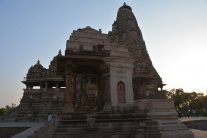
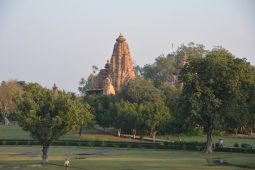
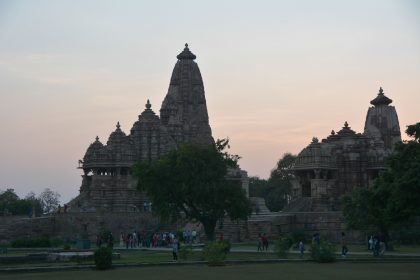
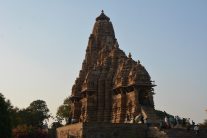
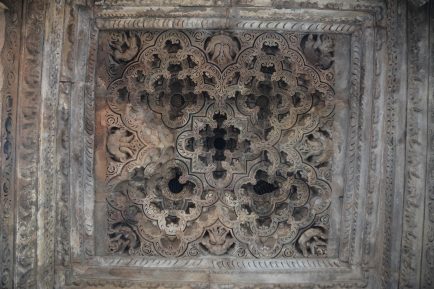
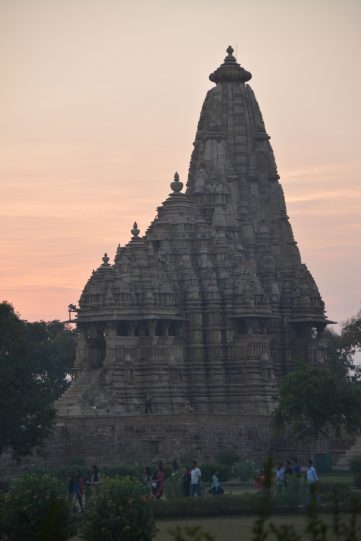

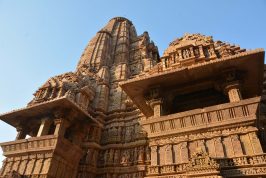
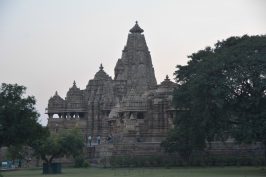
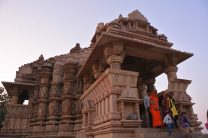
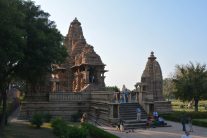
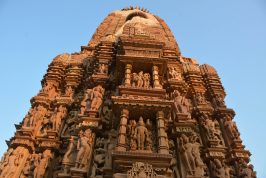
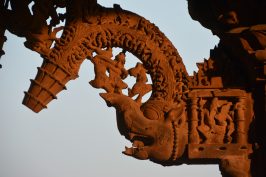
Most temples are free to visit, and surround the little town on all sides, but the main ones, the so-called Western Group, are fenced off and require an entry fee. 10 Rupees for Indian citizens, 250 for Foreigners.
The price difference is hefty, but I’m happy to pay it, as it hopefully cross-finances Indian’s cheap entry into their museums.
We walked through the area without guided tours, that are offered. The guards often also show you details on the sides or in the temples, but to be honest, it becomes a bit random quickly.
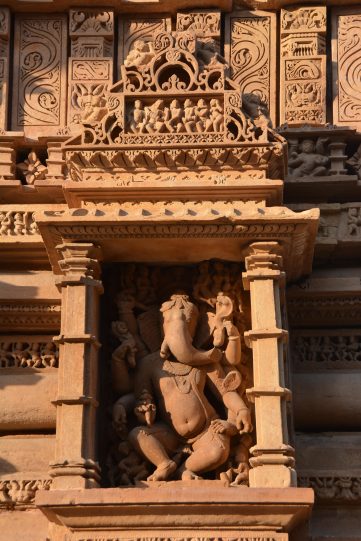
You are swamped by too much information and names and incarnations of the different Hindu gods, their wives and companions.
Brahma, Vishnu and Shiva are present all over, but I, as a total layman, cannot distinguish or see the details, or what they mean.
Mallory and I had a good time walking through the park during sunset, when the temples close. There is also a nocturne light show about the history of Khajuraho, something for the next days.