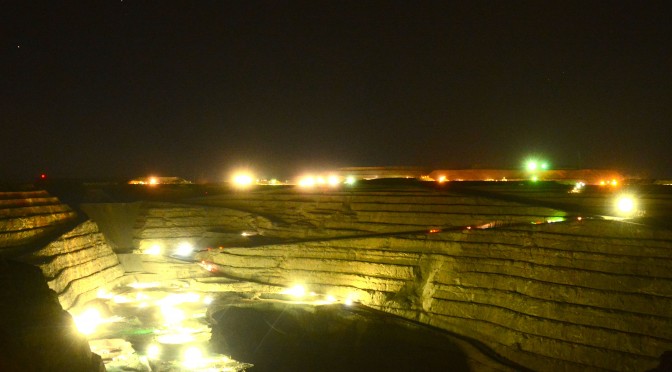
To understand Perth means understanding the term fifo. You’ll hear and see it over and over again.
Fly in, fly out. It’s the way a lot of people in Perth make their money, working in the mines in Western Australia.
I met a geologist who works for one of the mines. Nine days in a row, then he has five days off. The company pays his flights in and out, as well as food and accommodation there. In the few days in Perth, he rents a small room with other fifo’s. Saves a lot of money.
And the mines pay well, apparently. Considering the numbers of highest-end shops in some streets in the CBD, Perth is well-off. Tiffany’s Luis Vuitton, Chanel, Dior… Just to name a few.
Western Australia’s economy seems to be pretty much dependent on the mining industry.
A chute in prices of raw material, and the mining industry has a sneeze…. And WA is down with the flu.
 No wonder. There is not much else around here, except for the beaches, and some high class wineries.
But then, could that sustain a city the size of Perth, that far off? It is considered to be the most distant city with more than a million people on the planet.
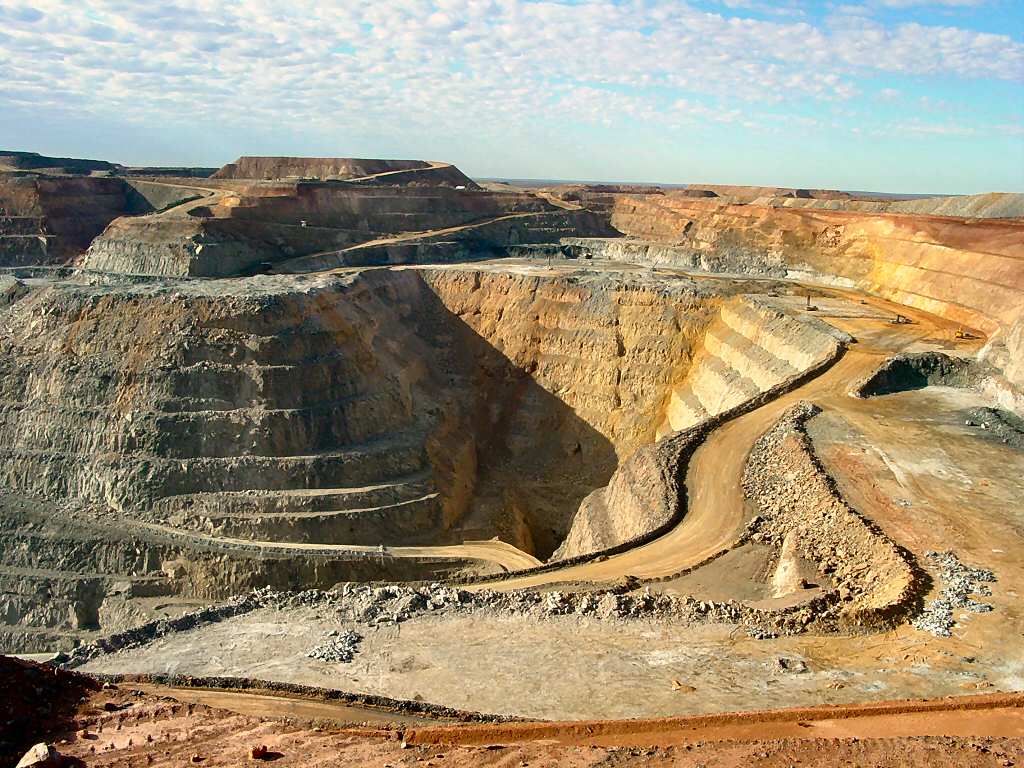
While Queensland is mining for coal, it’s mostly iron ore in WA. Other raw materials are gold and various precious metals, and uranium. And lots of all of it, judging from the number of huge ships out on the sea, close to Freemantle, the industrial port.
At any given day I have never seen less than eight ships lined up, sometimes up to twelve, waiting for their load of raw materials to be shipped across the globe.
 According to Wikipedia, mining in Western Australia, together with the petroleum industry, accounted for almost 90% of the State’s income from merchandise exports in 2008-09.
That year, Western Australia hosted 513 commercial mineral projects, 893 mining operations, as well as 64 operating oil and gas fields.
The geologist I talked to was from the Philippines. He’s making good money, and sending all of it back home. Lately though, with the decline of the Australian dollar, it has been considerably less money. The currency exchange risk is up to him.
A lot of young Australians also make their fortune this way – working like mad in the desert for a couple of years, not spending any money while on site, and after a few years buy a house, or two.
It seems the way of life here, although I wonder if that would be a deal for me. Sure, they make a lot of money fast that way. But then, only work, work, work, and a bit of recovery in between, for years on end, in a dry, lonesome place? Doesn’t sound much like a life to me.
But even if you’re not a geologist or mine worker, there’s a number of jobs for you. The mining industry needs a whole lot of infrastructure around it’s mines, cooks, services, etc…
What will they do once they dug out the last bit of raw materials out of their soil?
What is Perth’s economic future, that far off, down under and on a continent that has it’s economic and population centre on the other side…?
Right now it seems that that question is not to be answered in the nearer future.