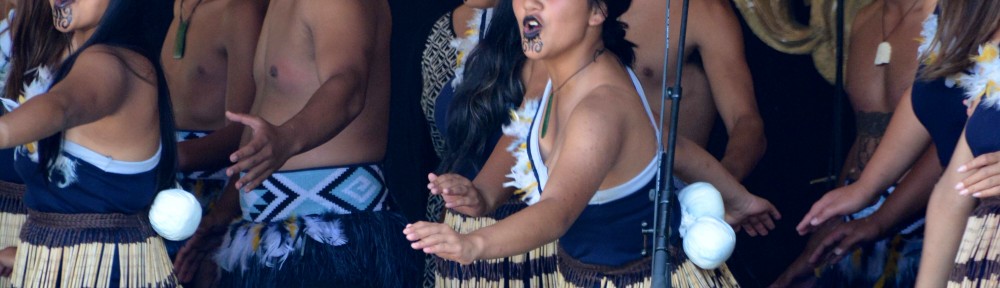
 I’m fascinated with Māori culture.
The first thing that astonished me is how visible it is here. In culture, language, names and people, you see Māori all around. Māori words have penetrated the Kiwi English, besides the occasional Kia Ora.
Unlike Australia, where I actually only ever saw a handful of Aborigines.
I was astonished to see Australia as basically a through and through white, European society. With a couple of Asians thrown in. But even then, go to San Francisco and you see a decidedly Asian presence, that makes Australia pale in comparison.
I expected a greater mix, considering that most news we get in Europe about Australia are either about a) some prime minster replacing the other in internal party feuds, or b) the efforts of Australian governments to deport some refugees onto some far-off foreign islands, claiming there were too many – whatever that may mean.
I’m not pointing fingers here, the European record on this is awful, too. I’m just saying that I expected a much more mixed, multi-cultural society than I saw in Sydney, Melbourne or Hobart. Aborigines were marginal, a few figures at a bus stop or on a corner…
New Zealand seems different. I see a bigger mix of cultures and people. Ok, I have no statistics, and I cannot really tell a Māori from another pacific islander, a Micronesian from a Melanesian or Polynesian…. but the streets look much more colorful to me.
Asia also has a a strong presence.. in fact, all over. There’s no distinct China town or Korea town here… it’s simply everywhere. I guess I can get Asian food in just about every block between here and the CBD.
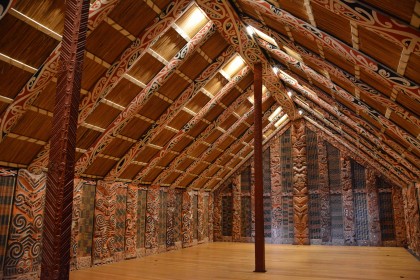

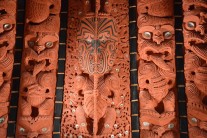
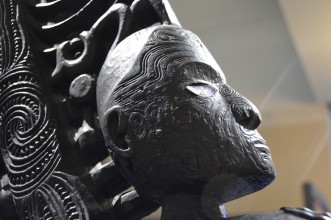
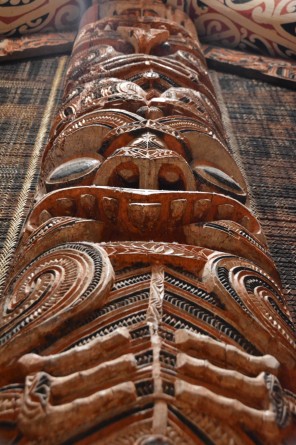
Now back to the Māori, they seem to have fared much better than Aborigines, historically speaking, and I wonder why that is. Somehow, they seemed to have escaped total submission.
The central point is respect, I guess, or at least the British realized that if they wanted to get hold of the islands, they needed the tribes on their side.
With only about 2000 Pākehā – European settlers, or generally non-Māori – on the island at the time, and a bunch of belligerent tribes, that might have been a good idea.

Unlike the Aborigines, who were enslaved, haunted down (with money paid for a scalp or pair of ears) the British saw it wise to conclude a treaty with the Māori tribes.
The Treaty of Waitiangi, signed in 1840 between the British representatives and numerous Māori chiefs, may have made a difference.
The British wanted to formalize relations (read: gain control of the islands), and invited Māori chiefs to conclude a treaty with the British Crown.
Chiefs of the North Island deliberated and signed it in the end, so that by November 1840, the UK could claim New Zealand as its colony (the French had also ready laid an eye on it too, which also is a factor in the equation).
The Treaty is highly controversial though. Its English and Māori language versions do not stipulate the same.
While the British assumed they had gained sovereignty, the Māori only assumed they had allowed them to govern, and given them a first right to purchase land.
Or, as the Māori probably saw it, a lease, as they did not regard the land as something that could be owned.
Second, with Māori being an oral culture, it was probably much more important to the chiefs what the Pākehā said to them in the negotiation, than what was actually written down on some paper.
Once control was assured, there were numerous breaches of the treaty by the colonists, that lead to a prolonged war with the Māori (which ended in their defeat), and they were successively stripped of their land, with only marginal, infertile grounds left.
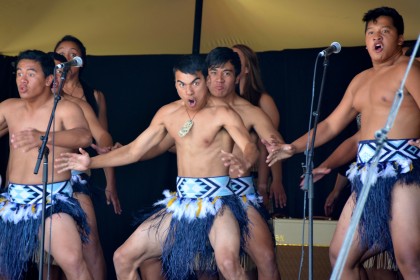
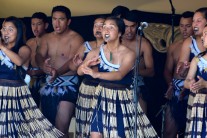
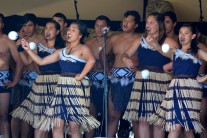

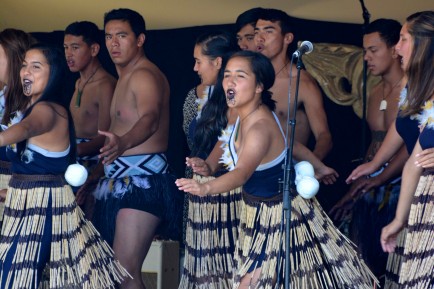
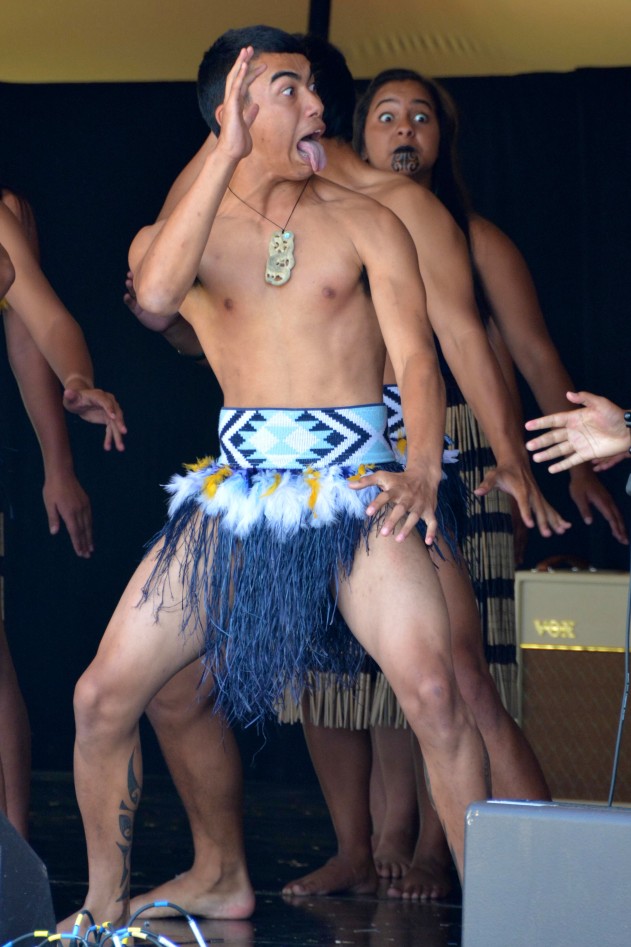
Today, the treaty is regarded as New Zealands founding document, and the day of the signing is a national holiday. While the treaty was disregarded for its legal effects for a long time (once they had the control over the island why deal with ‘barbarians’?), in recent decades it has gained some weight again.
A tribunal was established that looks into breaches of the treaty and can recommend compensation, after a lengthy debate its powers were also extended to historic breaches back to 1840.
It is an honorable attempt to rectify some of the injustices that have been done… but then how could you ever try to rectify it all…?
The New Zealand government has negotiated various settlements with the tribes, offering money and mostly land in compensation for treaty breaches and confiscations.
More importantly probably, they took measures to re-enforce cultural identity, and notably the possibility for Māori to speak and learn their native language (again), which had seen a massive drop since WWII.
Te Reo Māori, as it is called, is now the official language in NZ, next to English, and web sites and official informations is present in both languages, for example in museums, public buildings… there’s also a Māori TV station, and Wikipedia exists in Māori.
So, the overall situation of Māori seems to be better than most indigenous, colonized and abused peoples Europeans encountered on their voyages around the globe.
Still, life expectancy is a lower than for the average Kiwi, too many leave school without a diploma, their numbers are way out of proportion in prisons, their suicide rates higher…
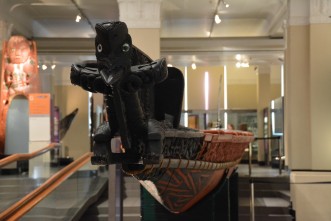
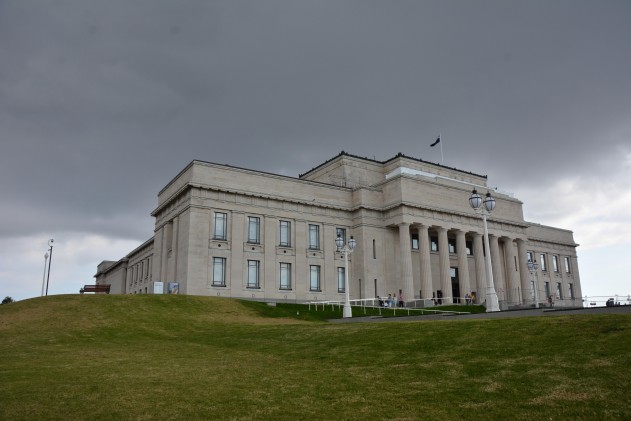
All of this I learned in the past couple of weeks, notably in the Auckland Museum, which has a great permanent exhibition on Māori culture, origins and the colonization period.
It also houses the New Zealand War Memorial, with a focus on New Zealand’s war efforts in WWI and WWI, but also recalling the wars with the Māori in the 19th century.
I can hardly say that I did more than a scratch on the surface in these past weeks. I’m curious what I’ll see once I’ll drive around the islands in the next two weeks.